

402 0 comments
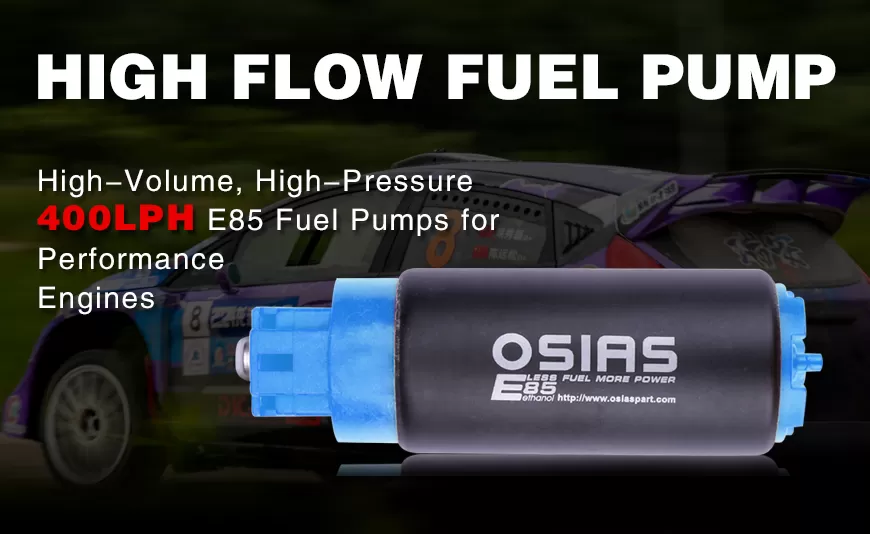
The fuel pump is a crucial link between the fuel tank and the engine, responsible for delivering fuel from the tank to the engine. If this critical link fails, the engine won't receive the required amount of fuel, and the consequences are obvious. Your car will exhibit various "uncooperative" behaviors, trying to tell you that the fuel pump is faulty. If you can detect these issues in time, your driving experience will be fully guaranteed. Unfortunately, if you fail to detect them in time, they can quickly lead to more serious problems, potentially resulting in breakdowns or expensive repairs later.
Of course, there's no need to be anxious or immediately assume that every little "bad" driving experience is a faulty fuel pump and rush to replace it blindly. Relax. Next, let's look at some signs that a fuel pump might be malfunctioning. If you notice any of the following problems, it's not too late to check the fuel pump.
1. Engine Vibration at High Speeds
When driving at high speeds, the fuel pump needs to deliver more fuel to the engine to ensure your car runs smoothly. If the fuel pump malfunctions, it cannot deliver enough fuel to the engine, causing it to malfunction. At this time, the vehicle will no longer drive smoothly, but will feel like it's being jolted for a second or two. This process is quick, and you may not immediately realize it's a fuel pump problem, but over time, this situation will recur, at which point it should be thoroughly checked. This is one of the common symptoms of a fuel pump malfunction.
2. Insufficient Power During Acceleration
Have you ever experienced this while driving: even though you've pressed the accelerator hard, the vehicle still crawls along like a turtle, especially when changing lanes or overtaking? Also, does the vehicle feel less responsive than before? Then you should check the fuel pump. This power lag is easy to detect and usually appears before other fuel pump malfunction symptoms.
3. Difficulty Starting
If your good mood is affected by a long engine start time or needing several attempts to start, then you should check your car. If you hear the starter motor turning, but the engine won't start immediately, it may be that the fuel pump is not providing the necessary pressure to the engine. This is an early warning sign. Don't assume your car key battery is dead or your engine is broken; first check if the fuel pump is working properly.
4. Frequent Stalling While Driving
If your vehicle stalls randomly while driving, especially at low speeds or idling, and then restarts normally but stalls again after a few minutes, this intermittent phenomenon usually means that fuel is not being continuously delivered to the engine. You'll feel as if the car suddenly stalled for a second. This stalling is not only frustrating but can also be very dangerous if it happens in traffic jams.
5. Abnormal Whirring Sound from the Fuel Tank
A normal fuel pump makes a slight humming sound, but as it ages, the sound becomes louder. This sharp whirring sound usually means the fuel pump is struggling or there isn't enough fuel. If you hear a low, continuous whirring sound near the fuel tank when the engine is running and the vehicle is stationary, you should check the fuel pump.
6. Unexplained Increased Fuel Consumption
If you drive normally but refuel more frequently, even every few days, your fuel pump may be malfunctioning. A faulty fuel pump causes unstable fuel pressure, leading to increased fuel consumption and higher fuel costs without your knowledge.
7. Sudden Speed Increases
As mentioned above, slow acceleration is a symptom of a fuel pump malfunction. Sudden acceleration without applying excessive throttle is another sign of a faulty fuel pump. The reason is simple: a faulty fuel pump causes uneven fuel supply, resulting in random speed spikes. This random speed fluctuation significantly impacts driver safety and poses a hazard to others. If you experience this even once, stop immediately and check your vehicle, ensuring it's safe to do so.
8. Difficulty Climbing Hills or Towing
If your vehicle struggles to climb hills or lacks power when towing, even with increased throttle, the engine may not run smoothly, or the vehicle speed may actually decrease. This lack of power is most noticeable when the car needs extra power. If these situations are more difficult to handle than before, it's likely a problem with the fuel pump.
9. Misfire under Engine Load
If you experience misfires while accelerating, towing, or driving uphill, it could be due to a faulty fuel pump. Under load, fuel demand increases, and the fuel pump may not supply enough fuel. You might feel a jerking or sluggishness; these symptoms typically appear when the vehicle is under heavy load.
10. Vehicle Won't Start at All
Have you ever experienced this where the engine turns but the car simply won't start? If so, the fuel pump may have completely stopped working. You might still hear the starter motor clicking or turning, but the engine just won't start. When your vehicle suddenly won't start and you can't find an obvious cause, the fuel supply system should be one of the first things to check.
11. Engine Malfunction Light Illuminated
An illuminated engine malfunction light can indicate many different problems. One of them is that the fuel pump is not maintaining a stable pressure. You might not notice it immediately because it might not affect your driving experience, but that doesn't mean the problem isn't there. If the malfunction indicator lamp (MIL) illuminates along with other fuel pump malfunction symptoms, an inspection is necessary.
12. Fuel Pump Overheating After Long-Distance Driving
If your car starts normally, but after a long period of driving, it stalls, idles erratically, or completely shuts off, and you are forced to let it cool down before restarting, but the problem recurs, this could be due to fuel pump overheating. Overheating-related malfunctions are a clear sign of fuel pump wear.
Summary
The essence of fuel pump failure is providing too much or too little fuel under inappropriate conditions, failing to properly and stably control the fuel supply. We hope this sharing of 12 fuel pump malfunction symptoms is helpful. If you have any further questions or are unsure which high-quality fuel pump to purchase, please contact us. OSIAS is always ready to serve you.

Latest
New
OSIAS BMW Cold Air Intake System
$240.00
New
New
New
OSIAS AUDI A3 S3 Cold Air Intake
$140.00
New
New
OSIAS BMW X3 X4 Cold Air Intake
$240.00
New
OSIAS BMW 540i Cold Air Intake
$185.00
New
New
OSIAS Audi A4 A5 Cold Air Intake
$160.00
Write a comment